Climate-Resilient Livelihoods
Strengthening livelihoods in a changing dryland landscape
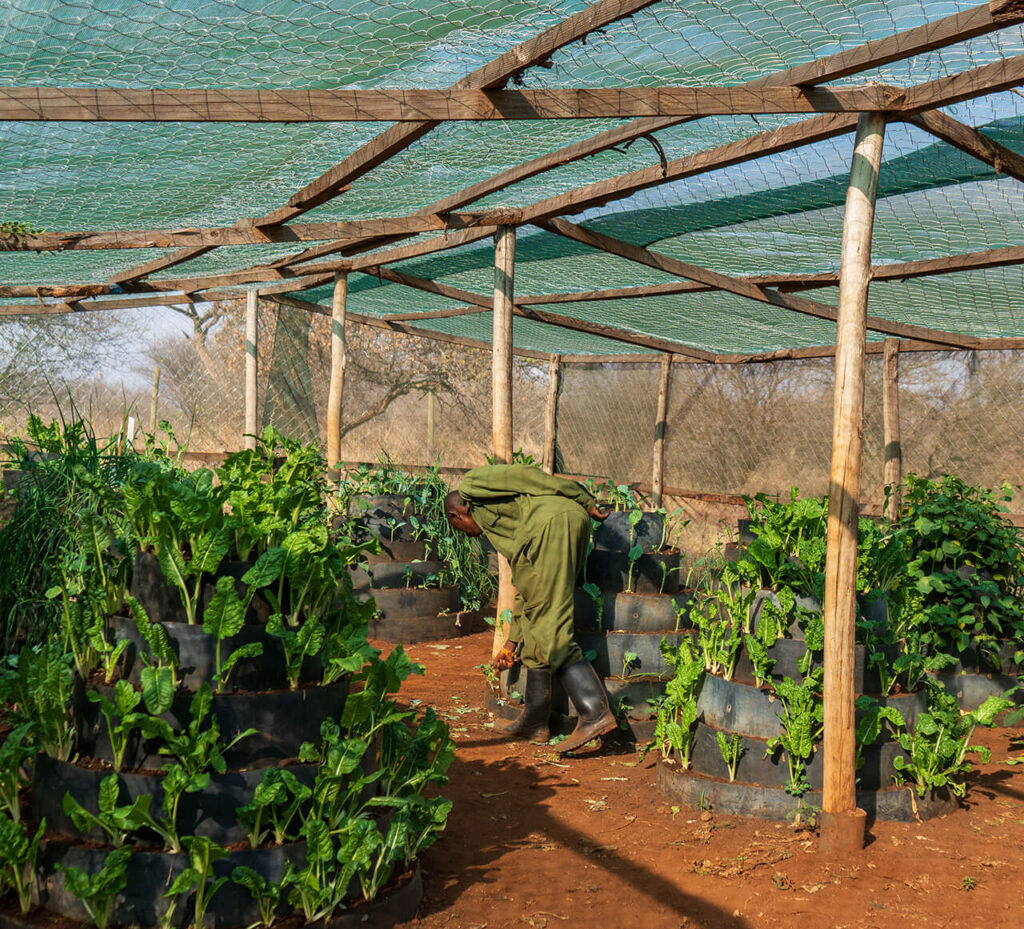
We support practical solutions, including climate-smart kitchen gardens, that help families build food security and resilience while reducing pressure on natural resources.
Vertical Gardens Programme
Growing more with less in a dryland landscape
Families in Amboseli live with limited rainfall, recurring drought and increasing pressure on water resources. Under these conditions, traditional food production can become difficult, leaving households more exposed to rising food costs, poor nutrition and climate shocks.
Conservation Kenya’s Vertical Gardens programme responds by helping families grow nutritious food using limited space and water. Through practical, low-cost growing methods, households can strengthen food security while adapting to the realities of a dry and increasingly unpredictable climate.
The programme turns small spaces into productive food sources, giving families a practical way to build resilience without placing additional pressure on an already fragile landscape.
What we Do
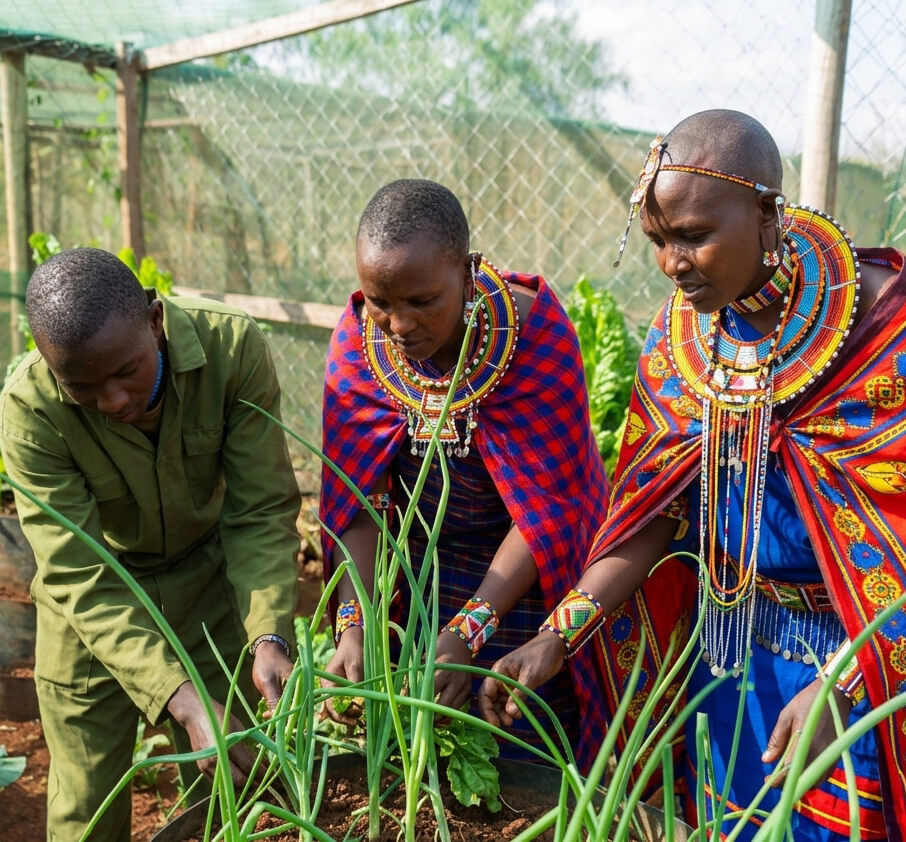
Conservation Kenya works with women to establish vertical kitchen gardens, promote water-conscious growing methods, introduce suitable vegetables and crops, build practical gardening and food-production skills, and strengthen household nutrition.
The programme helps families grow food using less land and water, improving resilience to drought, rising food costs and other climate pressures while reducing pressure on natural resources.
Impact
Story from the field
Resilience is rarely built alone. In landscapes such as
Amboseli, it is built in groups, in conversations, in shared labor, in knowledge passed from one woman to another, and in the quiet confidence that comes from discovering that something difficult can, in fact, be done differently.
That is the story behind our Vertical Gardens Programme.
Household Resilience & Skills Programme
Strengthening the capacity to adapt and thrive
Climate shocks rarely affect only one part of household life. Drought, rising food costs, limited income opportunities and growing pressure on natural resources can combine quickly, making families more vulnerable and reducing their ability to plan ahead.
Conservation Kenya’s Household Resilience & Skills programme responds by helping families build practical knowledge and capabilities that strengthen their ability to cope with environmental and economic pressures.
The programme connects livelihood skills, food security, climate awareness and household decision-making, helping families develop more options, make informed choices and navigate change with greater confidence.
What we Do
Conservation Kenya works with households and community groups to build practical livelihood and resilience skills, strengthen food planning and resource management, connect climate knowledge to everyday decision-making, support peer learning and knowledge sharing, strengthen the role of women and young people in household resilience, and link communities to relevant training and opportunities.
Greater household stability gives families more capacity to absorb shocks, make longer-term decisions and participate meaningfully in conservation, while reducing pressure on natural resources.
Impact
and resilience skills
Story from the field
What if we could build something of our own?
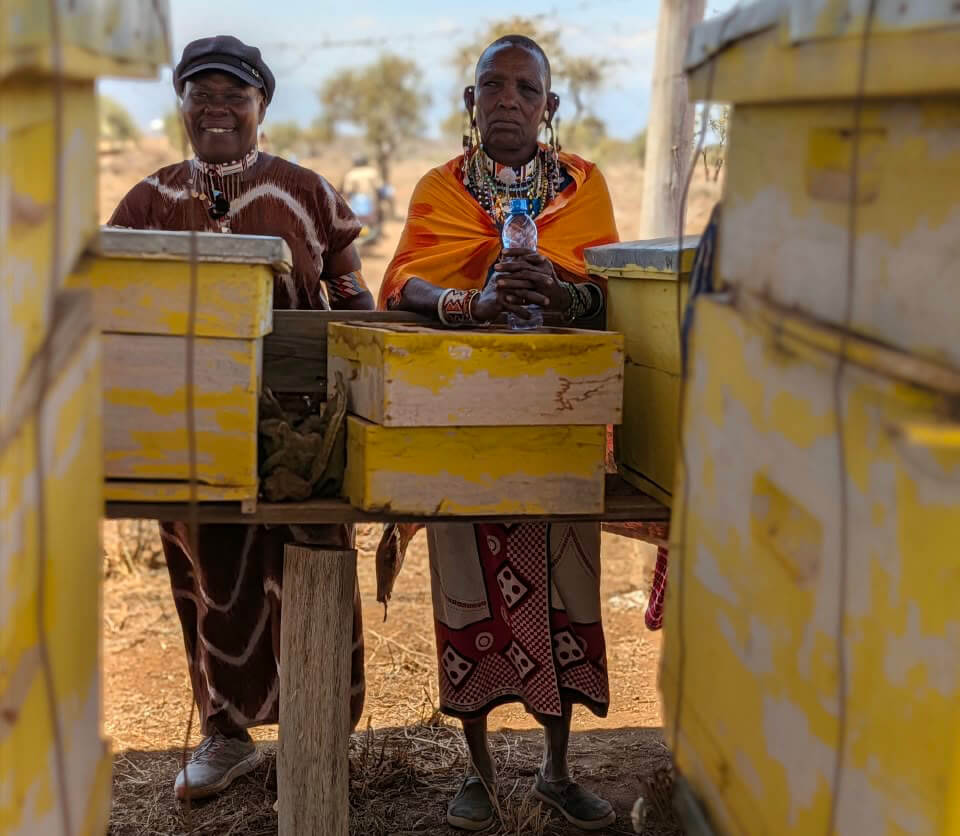
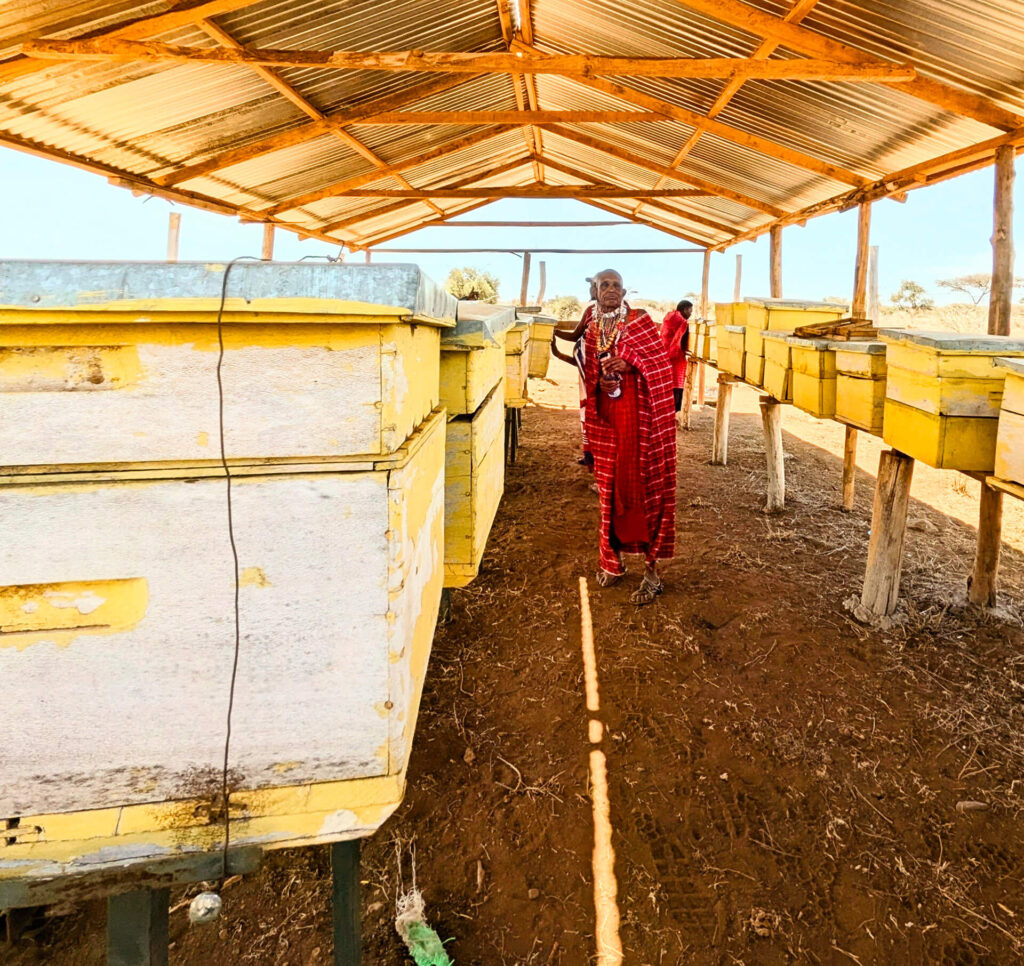
This is the question 15 Maasai women in Lemong’o asked themselves when they began imagining a beekeeping enterprise that could create income without demanding large tracts of land or placing further pressure on the environment.