When Conservation Training Is Not Enough
Forty-three young conservationists arrived in Naivasha to study wildlife. But over two days, the lessons that mattered most had little to do with animals.
A conservation career can demand technical knowledge, field skills and scientific discipline. But knowing how to manage money, navigate pressure, communicate professionally, protect your digital footprint or recognize burnout can determine whether a young person actually survives long enough in the profession to use those technical skills.
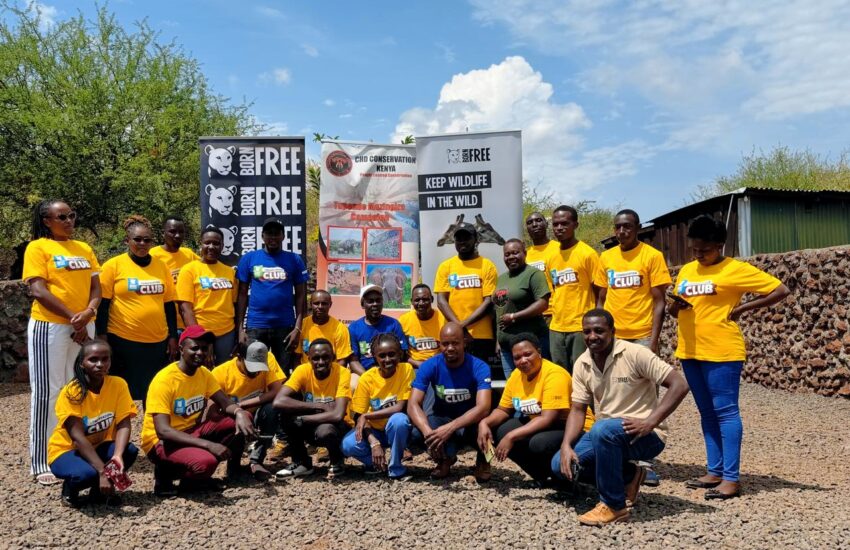
That was the thinking behind a two-day mentorship training facilitated by CHD Conservation Kenya for 43 diploma students in the Kenya Wildlife Trust Conservation Leadership Programme at the Wildlife Research & Training Institute in Naivasha.
The training focused on something formal education does not always make room for: the whole person.
Over the two days, students moved between communication exercises, career planning, financial literacy, digital safety, mental health, time management and conversations about peer pressure and personal boundaries. They practiced public speaking, worked through conflict-resolution exercises, created personal growth plans, learned how to prepare CVs and cover letters, and explored how tools such as LinkedIn and AI can be used responsibly in their professional lives.
The aim was to prepare them for everything that comes with building a life around that work.
For a young conservationist entering the field, a salary can disappear quickly without basic financial literacy. A promising professional reputation can be damaged by an unmanaged digital footprint. Poor boundaries, stress and burnout can quietly undermine a career before it has properly begun. And technical competence means little if someone cannot communicate ideas, manage conflict or navigate a workplace.
The students’ responses showed how relevant those lessons were.
After the training, 74.2% reported confidence in professional email communication and active listening. Some 87.1% felt prepared to navigate personal and romantic relationships safely, while financial and wellness confidence averaged 4 out of 5. Thirty-four of the 43 participants said they intended to begin a small savings habit. KWT_CLP Mentorship Training Rep…
The shift was also visible in how participants thought about their futures.
Students moved from general orientation into structured personal growth planning, with greater clarity around SMART goals, career responsibility and professional development. Mental health moved from something potentially difficult to discuss into something they could recognize and act on, with practical tools for managing stress, burnout and personal boundaries.
Digital readiness emerged as another important area. Some 77.4% of participants reported motivation to use emerging technologies and AI ethically, while 74.2% showed greater clarity around LinkedIn networking and career pathways. Overall, participants rated the practical value of the programme at 4.23 out of 5, with more than 70% awarding it a perfect score.
The most important lesson from the two days was also the simplest: mentorship cannot be a one-off intervention.
Participants asked for more practical sessions on public speaking, time management, financial tracking and digital media tools, while the training team recommended continued mentorship and regular opportunities for students to receive feedback on CVs, LinkedIn profiles and their professional development.
For CHD, this is where mentorship connects directly to conservation.
The future of conservation will depend not only on people who understand wildlife, but on people who can lead, communicate, make sound decisions, manage themselves under pressure and remain in the work for the long term.
These 43 students are still at the beginning of that journey but conservation leadership often begins long before someone receives a title.
Sometimes it begins with learning how to write the email, set the boundary, manage the first salary, ask for help, speak with confidence, and believe there is a place for you in the profession and those skills may prove just as important to the future of conservation as anything learned in the field.